
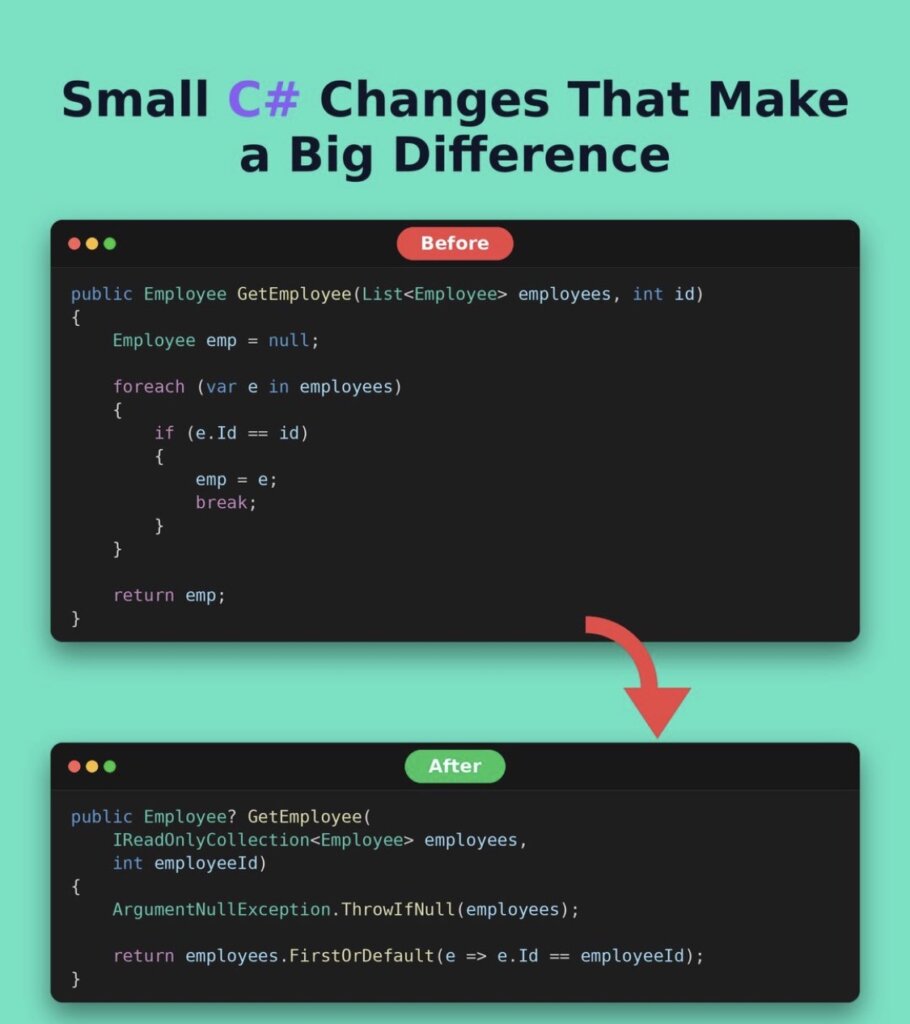
Sometimes we write more code than necessary to solve simple problems.
Take, for example, finding an employee by their ID.
Before the change:
• A manual loop using foreach.
• Extra variables.
• More lines to maintain.
After the change:
• Using LINQ with FirstOrDefault().
• The method's purpose is clear.
• A nullable return type.
• Input validation.
The functionality stays the same, but the code becomes easier to read and maintain.
Always remember: clean code is not about writing fewer lines; it is about making your intentions clear and obvious.
Sometimes, we write more code than necessary to solve simple problems.
Consider finding an employee by ID.
BEFORE:
- Manual "foreach" loop.
- Extra variables.
- More lines to maintain.
AFTER:
- LINQ with "FirstOrDefault ()".
- Clear method intention.
- Nullable return type.
- Input validation.
The functionality remains the same, but the code becomes easier to read and maintain.
Remember: Clean code isn't about writing fewer lines.
It's about making your intentions clear.



 English
 Arabic